

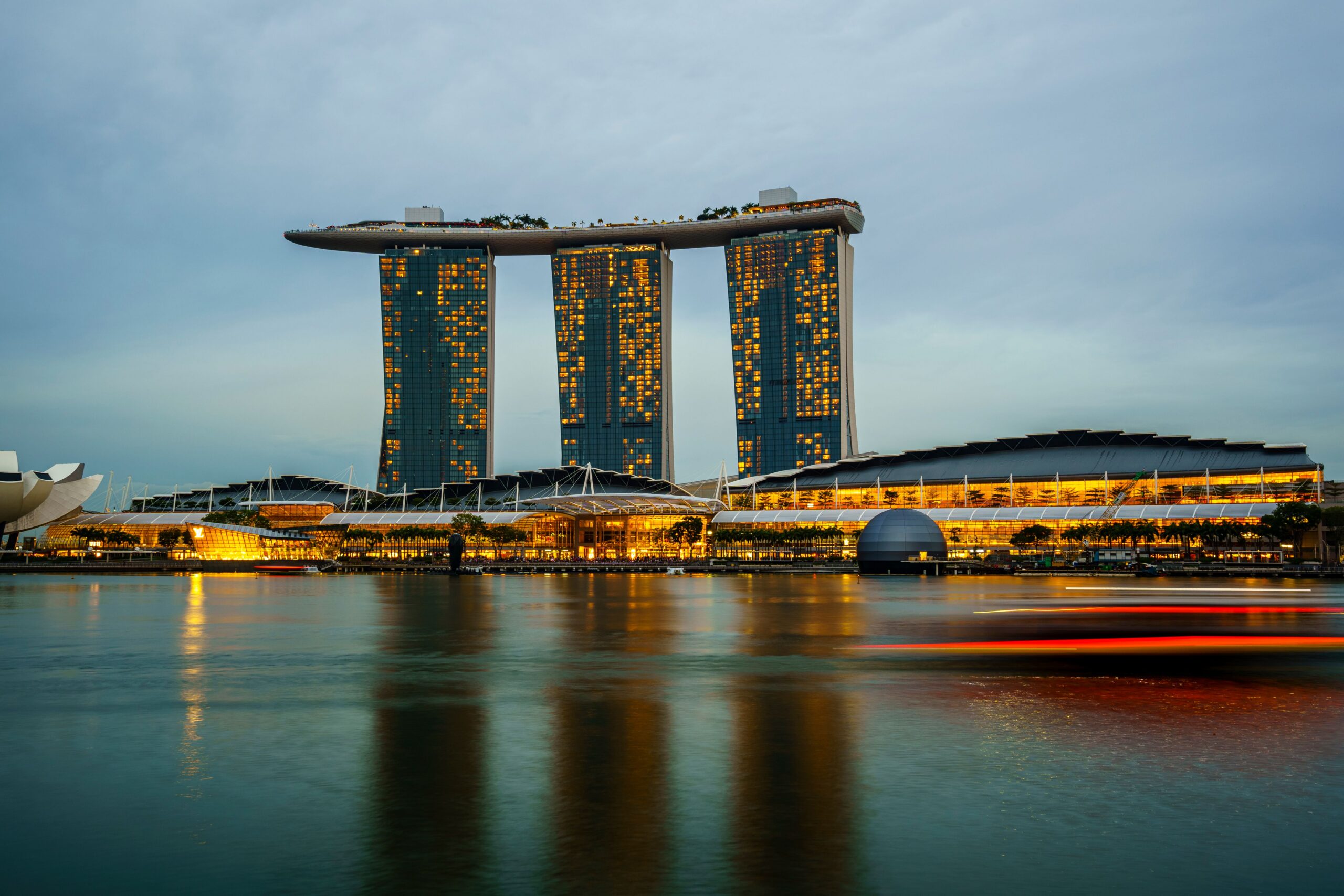
As public debate continues in Australia about our super settings, we continue our series looking at retirement systems around the world. This week our attention turns to Singapore.
And not for its iconic bay and world-famous food – but because, like Australia, it was one of six countries to score an A grade in the 2026 Marsh CFA Institute Global Pension Index.
While Singapore’s compulsory savings system is sometimes invoked as evidence that retirement savings can successfully serve several purposes, there is an important distinction. Singaporeans save vastly more than Australians – three times the rate.
For Singaporean citizens and established permanent residents aged 55 and under earning more than S$750 a month, their equivalent of our super system – the Central Provident Fund (CPF) – has a contribution rate of 37% of wages. Of that, 20% comes from the employee and 17% from the employer.
That contribution rate underlines a key difference between our systems.
Australia’s super system essentially asks compulsory savings to do one job: provide income in retirement. Singapore’s does several jobs including retirement, housing and healthcare – with separate accounts for each and mandatory contributions to fund them.
And while Singapore allows the ordinary account savings to be used for housing and education, the special (retirement) account is completely ringfenced from these with no withdrawals allowed except for compassionate reasons such as terminal illness.
Singapore continues to strengthen retirement adequacy. Its government has announced further increases on CPF contribution rates for workers aged over 55 to 65 from January 2027, with the additional contributions allocated to retirement savings up to the Full Retirement Sum.
Eligible older Singaporeans with lower retirement savings will also receive CPF top-ups of up to S$1,500 in 2026. The additional contributions will be allocated to the worker’s Retirement Account, rather than being made available for housing or other purposes, until they reach the Full Retirement Sum (FRS).
In other words, if an older worker hasn’t yet accumulated the targeted amount for retirement, the additional compulsory contributions being introduced are specifically directed towards closing that retirement savings gap.
When policymakers worry that people might not have enough for retirement, the instinct in Singapore is to strengthen retirement saving, not weaken it. That lesson seems particularly relevant to Australia.
Our own public policy debate about the role and adequacy of super needs to be similarly focussed. A handful of voices continue to try to argue to use super for purposes other than retirement income. Those voices are out of step with the overwhelming majority of Australians – who strongly want policymakers to protect the super system and keep its fundamental design features strongly intact.
Shadow Assistant Minister Garth Hamilton recently put the case for such policy stability powerfully, arguing that super should be protected for its intended purpose of delivering retirement income and calling for stable settings around Australians’ retirement savings. As he put it: “It’s your Super and no government should mess with it.”
There’s an opportunity here for all policymakers across the political spectrum. Rather than reopening the foundations of super every time Australia confronts an unrelated policy challenge, they should all strive for consensus on the fundamentals that matter to 17 million Australians: stable system settings, strong preservation, and a relentless focus on improving retirement adequacy.
The question should be how we build on the remarkable achievement of compulsory super.
That means protecting what works and fixing what doesn’t: closing coverage gaps, tackling unpaid super, improving super for people with breaks in their working lives, and ensuring more Australians can turn their savings into a secure income in retirement.


